

Tackling Disparities in Maternal Health
When she was nine, Ifrah Ahmed MPH ’23 became a midwife’s assistant. The job was just as informal as the maternal health clinic itself; the midwife was Ahmed’s mother, and the makeshift clinic was in their home in the middle of a Somalian refugee camp. But helping her mother care for other refugee women and children sparked something in young Ahmed that would later lead her to a career in public health.
Now, after graduating from the Master of Public Health (MPH) online/hybrid program at the Geisel School of Medicine at Dartmouth, Ahmed is working to keep refugees from succumbing to preventable diseases like she witnessed as a child caught in the crossfire of a war-torn nation. She’s also building a global nonprofit to address the maternal and child health challenges she has seen up close throughout her life.
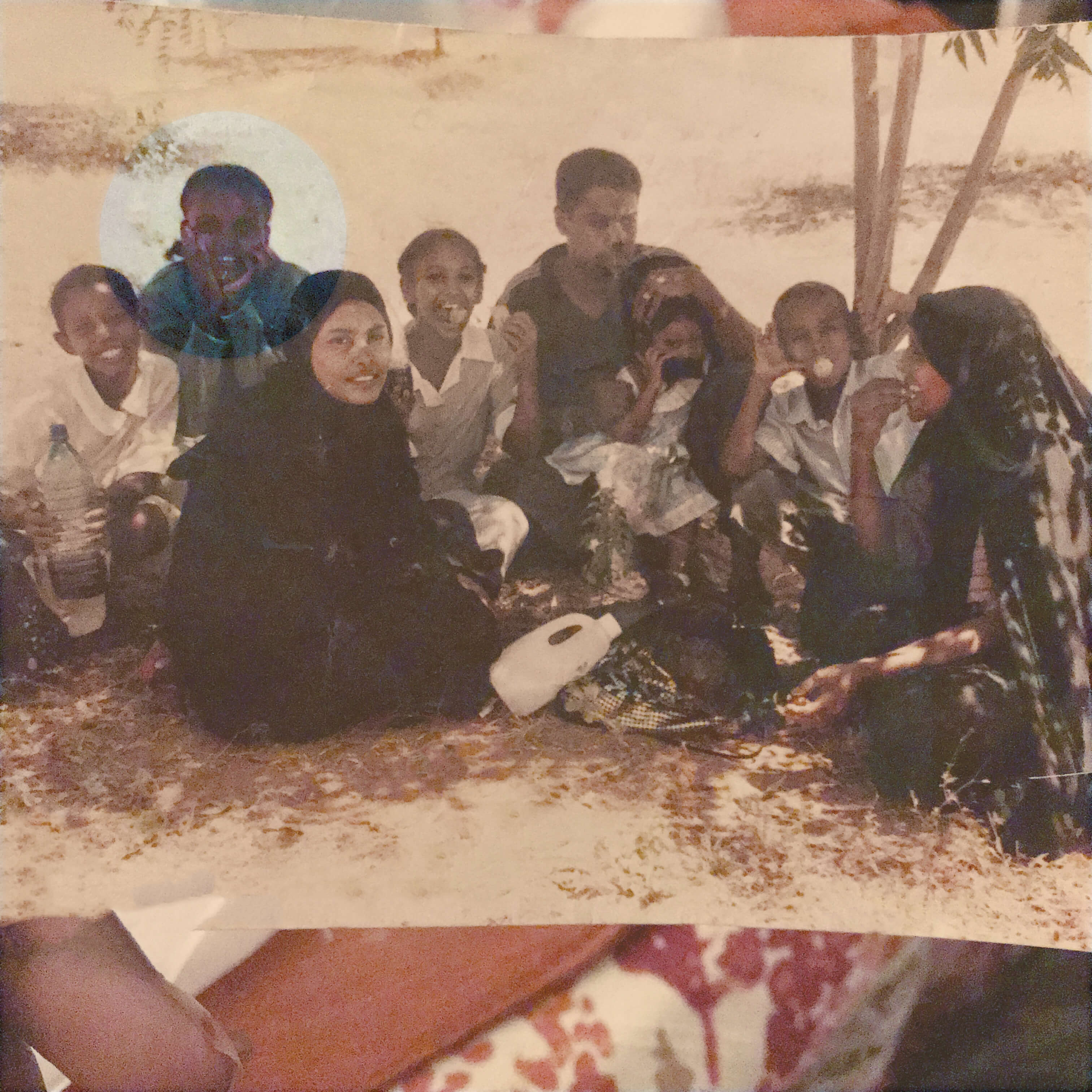
Ifrah Ahmed MPH ’23, second from left, eats with neighbors and friends in the refugee camp. Ahmed’s mother is all the way on the right.